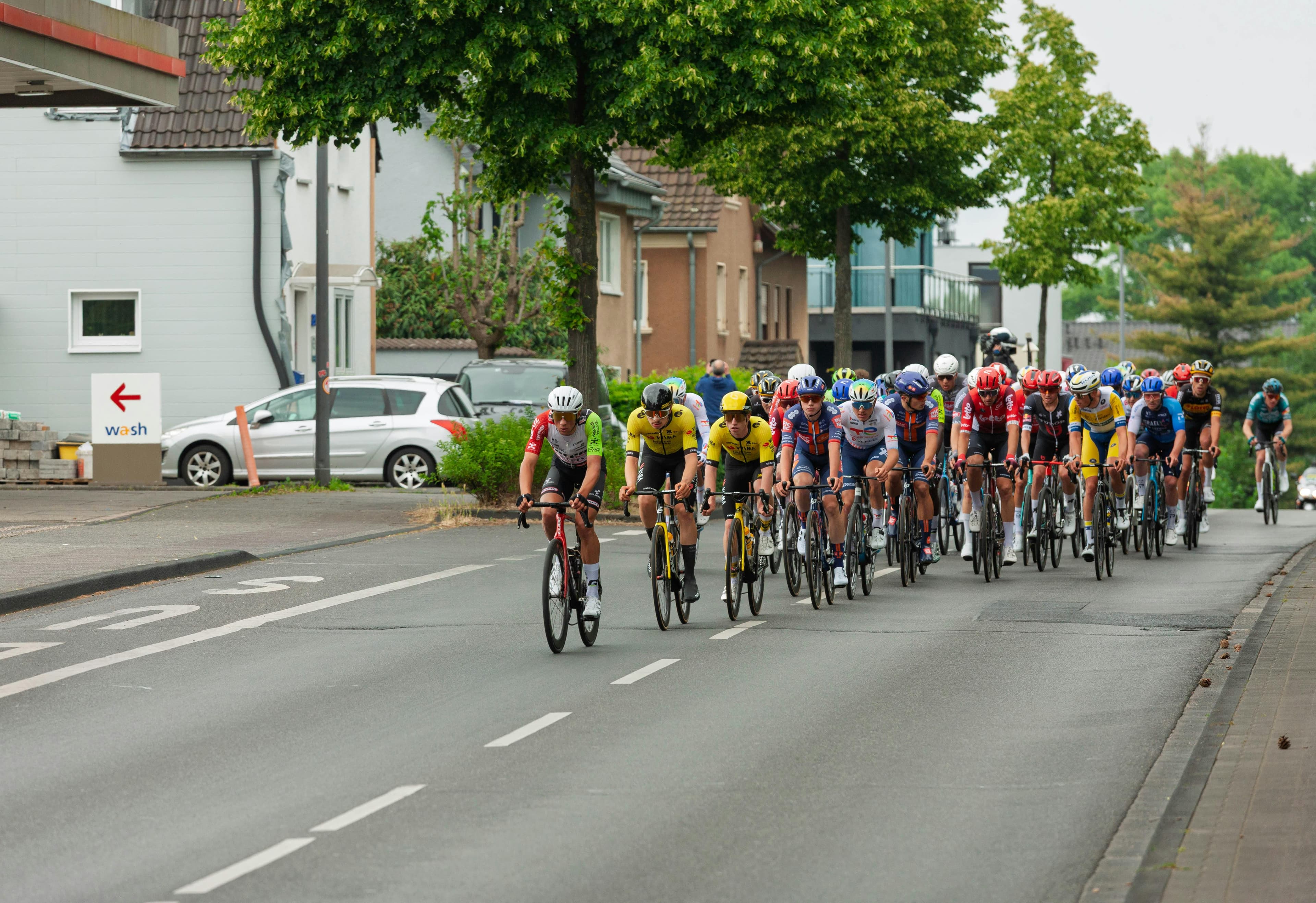
Riding in a peloton (bunch / group) is efficient and social, but it relies on consistency and trust. The closer the spacing, the more important it is that every rider behaves predictably. These fundamentals will keep you and the group safe.
Hold a straight, steady line
Pick a line and keep it. Small, sudden movements ripple through the group and can cause crashes several riders back. Look ahead, not down at your front wheel, so you can anticipate changes early.
Maintain a consistent gap
Ride a safe, steady distance from the wheel in front. Avoid “yo-yoing” (closing gaps and braking repeatedly). If the pace eases, soft-pedal rather than grabbing the brakes.
Brake smoothly and early
Hard braking is a common cause of pile-ups. When you need to slow, ease off the pedals first, then apply gentle braking. Give riders behind you time to react.
No overlapping wheels
Keep your front wheel directly behind the rider ahead. Overlapping their rear wheel reduces your margin for error—any sideways movement can bring you down.
Communicate hazards
Call out and point to obstacles (holes, debris, parked cars) and signal changes like slowing or stopping. Clear, early communication prevents chain reactions.
Respect the pace
Match the group’s speed. Avoid sudden surges or sprinting off the front. If you’re unsure, ride near the back until you understand the group rhythm.
Rotate only if you understand the system
Different groups use different rotation styles. If you’re new, ask what the policy is. When you do take a turn at the front, keep it short and steady, then peel off smoothly.
Choose your position wisely
The middle of a large bunch is efficient but less forgiving. Beginners are often safer toward the back where gaps are slightly larger and the pace steadier.
Stay alert
A peloton requires constant attention. Watch for changes in terrain, traffic, and rider behaviour. Keep both hands ready on the bars, especially in busy sections.