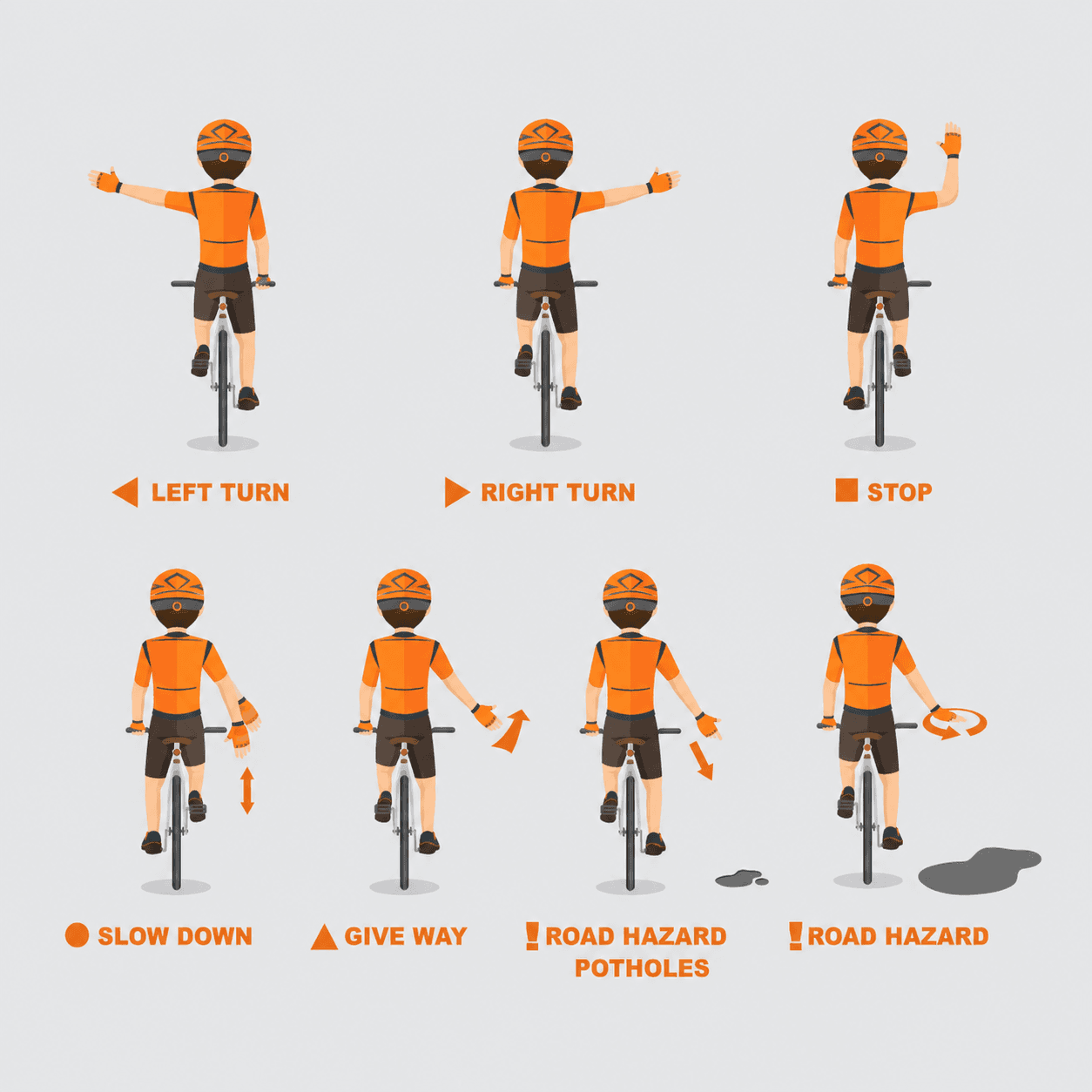
Clear communication is the backbone of safe group riding. Signals and calls should be simple, early, and repeated down the line.
Hand signals
Pointing hazards
Point directly at potholes, debris, or rough surfaces. Keep the signal visible until riders behind have seen it.
Slowing down
A flat hand moving up and down (or held low behind your back) indicates a reduction in speed.
Stopping
An arm extended downward or a clear “stopping” call signals a full stop.
Turning
Left arm out for a left turn; right arm out for a right turn. Use well before the junction.
Single file
A hand behind your back with one finger pointing indicates the group should form single file (often for narrow roads or traffic).
Obstacle / slower rider ahead
If you’re approaching a parked car, or some other obstacle which you will need to get round, swing your hand behind the small of your back and point to the to the direction you are moving to avoid the obstacle. If you’re going to have to pull out to get around, do a head check to see if there’s anything coming up behind you before making the manoeuvre.
Verbal calls
“Car back” / “car up”
Alerts riders to vehicles approaching from behind or ahead.
“Hole” / “gravel” / “glass”
Identifies specific hazards on the road.
“Slowing” / “stopping”
Reinforces hand signals when speed changes.
“Clear”
Used at intersections to indicate it’s safe to proceed (only when you are certain).
Best practices
- Signal early and clearly
- Repeat calls you hear to pass them back
- Keep one hand on the bars when signalling where possible
- Avoid over-calling; be precise and relevant